Monument Valley — Learning to Hold the Reins

Updated: Mar 24
The desert has a way of quieting things.
Phones lose signal. Conversations slow. The sky stretches wider than whatever worries you carried with you when you arrived.
A few weeks ago we drove north through New Mexico, eventually crossing into the red earth of Monument Valley. It’s one of those landscapes you feel like you already know before you arrive — the kind of place that lives in movies, photographs, and the collective imagination of the American West.
But standing there in person is different.
The silence is deeper.
The land feels older.
And the sky somehow feels larger than it should.
We decided to explore the valley the best way possible — on horseback.
Riding the Valley
From the moment I climbed onto my horse, I struggled with him.
He was stubborn. Testing boundaries. Moving when I didn’t want him to move and resisting when I tried to guide him.
But the truth is…
I didn’t really want to force him.
I didn’t want to pull hard on the reins or command him where to go. I wanted him to move naturally, freely, the way he wanted to.
But horses don’t work that way.
At one point he began kicking, and fear rushed through my body. I jumped off.
The guide walked over calmly and said something simple:
“You had this. Next time, just pull the reins.”
Just pull the reins.
And somehow a horseback ride through Monument Valley suddenly became a lesson about life.
Fear on the Trail
As the ride continued, we began moving through rougher terrain—climbing steep red hills and descending rocky paths beneath the towering monuments.
I remember looking up at the Mittens rising above us.
But only for a moment.
My attention kept snapping back to the horse.
What if he slipped?
What if he couldn’t make it?
What if I fell?
Fear had quietly crept into my body.
And fear doesn’t guide well.
Fear makes you hesitate.
It makes you uncertain.
And horses feel that.

The Fall
Eventually we reached a steep descent.
Before I fully understood what was happening, my horse lunged forward and I went flying.
My glasses smashed into my face. Dirt filled my hands. My cowboy hat—once black—was suddenly covered in red dust from the desert floor.
For a moment everything went quiet.
Then laughter. Friends asking if I was okay.
Alana jumped off her horse and offered to switch with me. She looked at the horse and said something that stuck with me.
“If you don’t control him, he’ll control you. He’ll test you.”
And that’s exactly what had been happening the entire ride.
My horse had been testing me.
And I let him win.
I let him control the direction.
The energy.
The pace.
And eventually I ended up on the ground.

The Lesson
Standing there in Monument Valley with dirt on my face, scratches on my hands, and a cowboy hat that had turned red from the desert…
I couldn’t help but laugh.
Because the lesson suddenly felt obvious.
If I don’t take the reins of my life, something else will.
Fear will.
Other people will.
Circumstances will.
But the truth is—
I’m the rider.
And sometimes you have to pull the reins and say,
Alright.
Let’s go.
Giddy up.
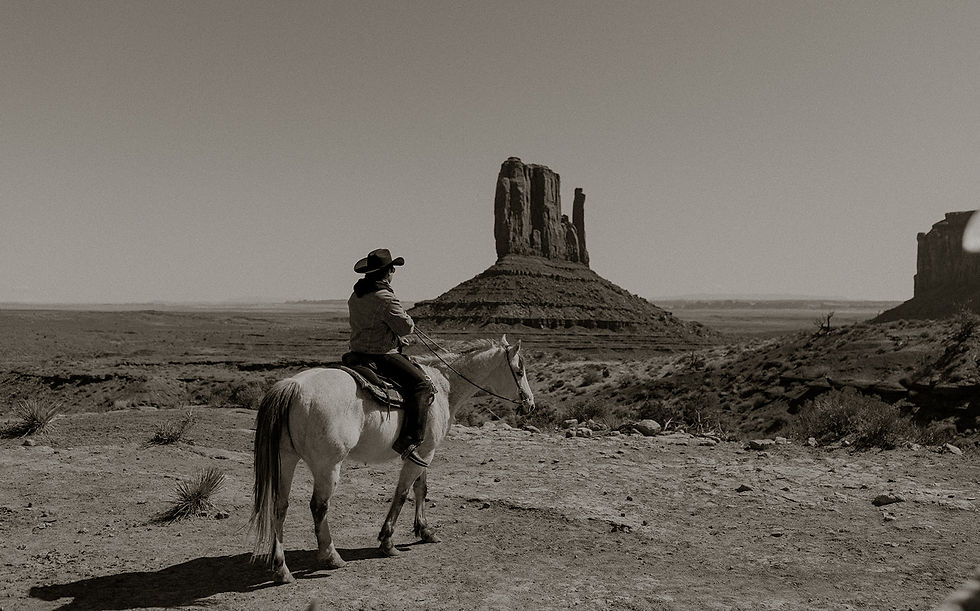
Monument Valley
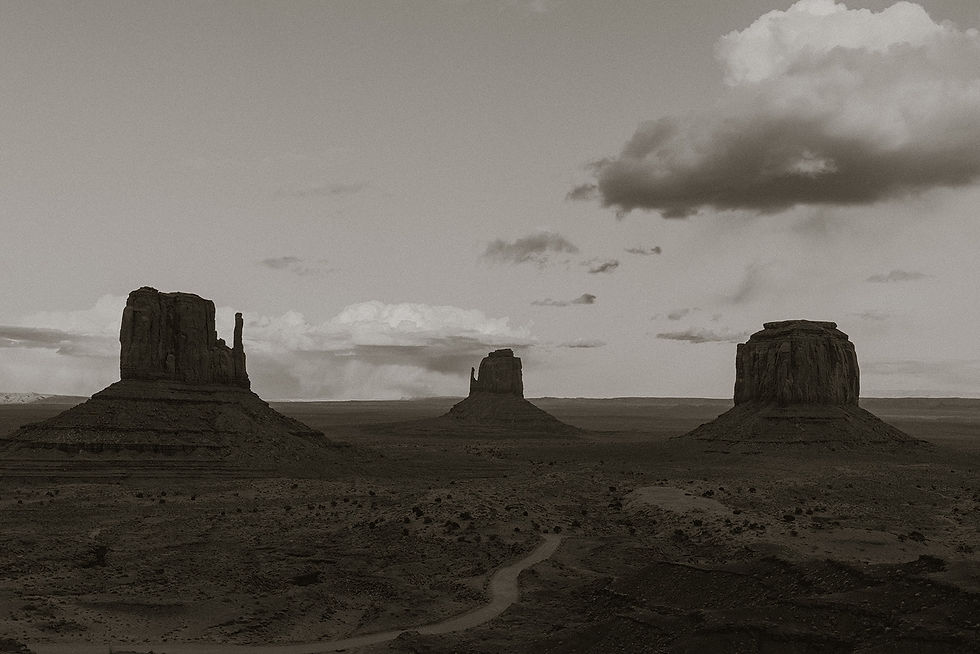
Monument Valley sits along the border of Arizona and Utah and is part of the Navajo Nation. Massive sandstone buttes rise from the desert floor, some reaching more than 1,000 feet into the sky.
It’s one of the most iconic landscapes in the American West — and yet somehow it still feels untouched.
Standing there, surrounded by formations that have existed for millions of years, your own life starts to feel very small.
And in the best way possible.
Field Notes
Location
Stay
The View at Monument Valley
A quiet place tucked into the landscape. Waking up here feels like you’re already inside the experience.
Experience
Guided horseback ride through the valley
We booked a two-hour ride, and it was easily one of the most memorable parts of the trip.
You’re not just riding through the valley — you’re riding into it. Right up against the monuments, where everything feels larger than life.
Ride Length
Two hours — highly recommended
Anything shorter would’ve felt rushed. This gave us time to fully take it in, move slow, and actually feel the landscape.
Best Time to Visit
Best Light: Late afternoon into sunsetThe way the light hits the monuments… unreal. This is when everything comes alive.
Important: Gates close at 3 PM for the scenic driveWe recommend arriving early, driving through first, then slowing down for the evening.
FOOD
There aren’t many food options nearby.
We brought an ice chest and made a day out of it — stopped for lunch, took our time, didn’t feel rushed.
Dinner at The View was also worth it.Simple, but the setting carries everything.
Photographer’s Notes
CAMERAS USED
CANON R5
primary / high-detail storytelling
CANON R6
low-light / movement / backup body
FUJIFILM X100V
digital / everyday carry
LENSES
CANON 35MM PRIME
natural perspective / cinematic feel
FILM
ILFORD HP5 PLUS 400 (35MM)
grain, contrast, and timeless black & white
NOTES
a mix of digital and film — depending on the moment, the light, and what it asked for
WATCH THE TRIP ON FILM
I also documented this trip on video.You can watch the full travel film below.

Comments